
WELCOME BONUS 300%
UP TO €2000 + 100
FREE SPINS
UP TO €2000 + 100
FREE SPINS
Home → Blackjack
Blackjack at BetZillo Casino
Which Rule Variants the Software Shows
BetZillo Casino presents blackjack with a six-deck shoe, dealer standing on soft 17, doubling on any first two cards, doubling after a split, and a 3:2 payout on naturals. That configuration returns 99.54% to a player using basic strategy, leaving a house edge of 0.46%. On a €100 stake, the theoretical cost is 46 cents per round.
A late surrender rule appears on selected tables, allowing a player to forfeit the hand after the dealer has checked for blackjack and recover 50% of the stake. The rule improves the return by about 0.08 percentage points, a modest gain compared with early surrender, which can be worth up to 0.6 percentage points but is extremely rare.
A single-deck classic game with a 3:2 payout reaches 99.85% RTP, a house edge of just 0.15%. The switch from eight decks to one is worth about 0.48 percentage points, yet many casinos offset that with a 6:5 payout. At 6:5, a €10 blackjack pays €12 instead of €15, adding 1.39 percentage points to the casino's edge.
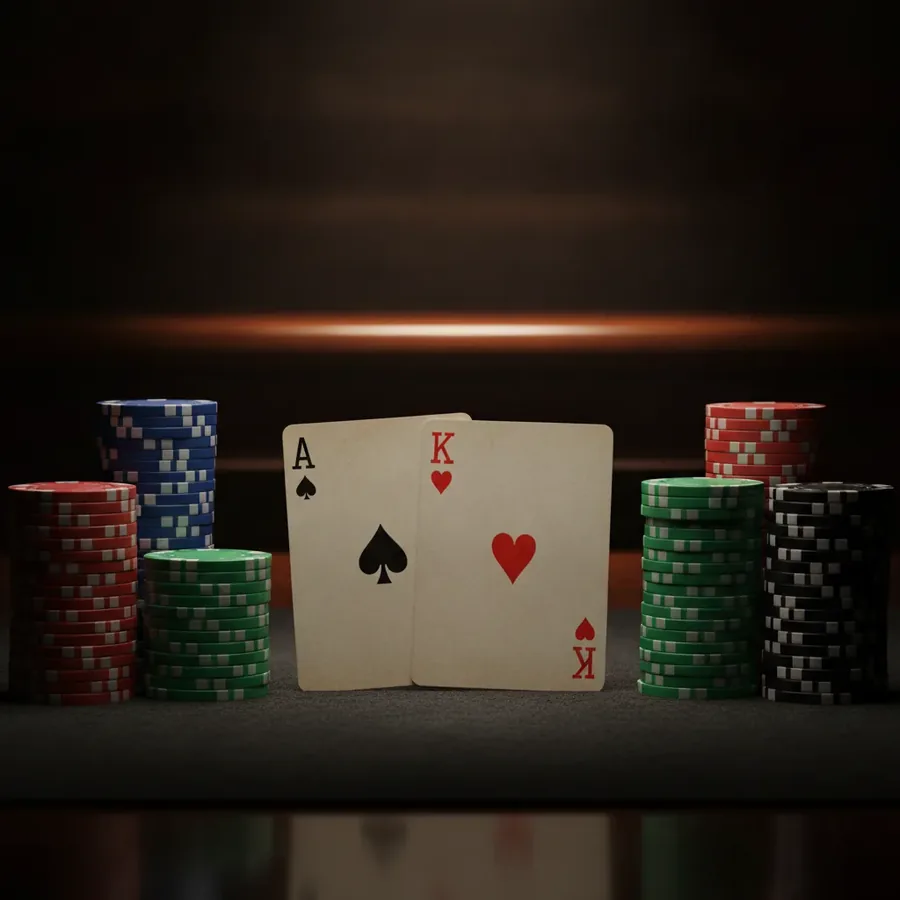
The 3:2 Blackjack Payout Explained
A 3:2 blackjack payout returns 150 EUR on a 100 EUR stake, while the 6:5 alternative pays only 120 EUR on the same wager. The difference is not cosmetic: replacing 3:2 with 6:5 adds exactly 1.39 percentage points to the house edge, more than any other single rule change. On a 10 EUR bet, that is 15 EUR against 12 EUR for every natural blackjack.
The six-deck game with the dealer standing on soft 17, doubling on any first two cards, doubling after a split allowed and a 3:2 payout holds a house edge of 0.46% and an RTP of 99.54%. Basic strategy is required to reach that figure. The single-deck classic rules version with a 3:2 payout improves the return to 99.85% and leaves a house edge of just 0.15%.
Players should check the payout before sitting down, because a 6:5 table on six decks shows an RTP of only 98.15% and a house edge of 1.85%. That edge is roughly four times the 0.46% of the standard six-deck 3:2 game. On 100 EUR of blackjack stakes, the 6:5 rule costs about 1.85 EUR on average, against 0.46 EUR at a proper 3:2 table.
Splitting Eights vs Standing on 16
Splitting eights against a dealer ten turns one weak 16 into two hands starting on eight, and doubling after a split improves RTP by about 0.14 percentage points. Resplitting aces improves it by 0.08 percentage points. On €100 staked, those rule effects together are worth €0.22, a real sum over a session of a few hundred hands.
Standing on 16 against a ten leaves the dealer to draw, and the dealer hitting soft 17 lowers RTP by 0.22 percentage points, pushing the six-deck house edge from 0.46% to 0.68%. A player who stands on 16 rather than splitting forfeits the 0.14 percentage-point gain from doubling after a split. €100 staked costs €0.68 on average under H17 instead of €0.46.
A split allows up to four hands, with split aces usually receiving one card each, and the extra stake per hand means the total exposure rises with the split. Doubling doubles the stake for one card, so a split followed by doubles can put four times the original stake at risk. The rule effects, not the decision alone, set the long-run cost of each choice.
16 vs 10 played incorrectly: most common error
Blackjack Insurance on six to eight decks carries an RTP of 92.53% and a house edge of 7.47%, a separate side bet of up to 50% of the main bet when the dealer shows an ace. Basic strategy always declines it, except for card counters at a true count of at least +3. On a €10 main bet the maximum insurance stake is €5, and €5 at a 7.47% edge costs about €0.37 on average.
With a single deck the insurance edge is about 5.88%, roughly 1.59 percentage points lower than the 7.47% on six to eight decks. Insurance pays 2:1 but lowers the return in the long run, so the payout ratio misleads. A €5 insurance bet on a single deck costs about €0.29 on average, still far more than the main game's 0.46% edge on a €10 stake.
Blackjack 6 decks, S17, DAS, DOA, 3:2 payout, basic strategy keeps a house edge of 0.46%, and basic strategy is required to reach that figure. Taking insurance against a dealer ace is the most common error because the 2:1 payout looks favourable. €100 staked on the main game costs €0.46 on average, against €7.47 per €100 on insurance, a difference of 7.01 percentage points.
Insurance vs Even Money When You Hold Blackjack
Insurance pays 2:1 and covers up to 50% of the main bet when the dealer shows an ace, but Blackjack Insurance on six to eight decks has an RTP of 92.53% and a house edge of 7.47%. On a €10 main bet the maximum cover is €5, and €5 at that edge costs about €0.37 on average. Basic strategy always declines insurance unless the true count is at least +3.
A player blackjack versus a dealer ace pays 3:2, so €100 returns €150, while the same hand taken as even money returns €100 regardless of the dealer's card. The 3:2 payout is worth €50 more per €100 staked when the dealer does not have blackjack. The insurance side bet on the same hand carries a 7.47% house edge on six to eight decks, about 5.88% on a single deck.
Blackjack Liberal Vegas Strip, with liberal rules and 3:2, runs at an RTP of 99.72% and a house edge of 0.28%, so a player blackjack there pays 3:2 against a €0.28 average cost per €100 staked. Taking even money instead of the 3:2 payout gives up the €50 difference on a €100 blackjack. The side bet's 7.47% edge makes insurance the more expensive of the two options.
Blackjack variants at a glance
| Variant | Payout | House edge | Rule | RTP |
|---|---|---|---|---|
| Blackjack Liberal Vegas Strip (liberal rules, 3:2) | Blackjack 3:2, win 1:1 | 0.28% | The most player-friendly rule set: S17 + DAS + resplit + late surrender. Standard deviation 1.15 | 99.72% |
| Blackjack 6:5 payout instead of 3:2 (6 decks) | Blackjack 6:5, win 1:1 | 1.85% | Replacing 3:2 with 6:5 adds exactly +1.39 percentage points to the casino's edge – more than any other rule change. On a €10 bet a blackjack pays €12 instead of €15. | 98.15% |
| Blackjack Split / double / H17 – rule effects | Double – stake ×2 with one card; split – up to 4 hands; split aces usually get one card each. | H17 +0.22 percentage points; RSA −0.08 percentage points; DAS −0.14 percentage points | Dealer hitting soft 17 lowers RTP by 0.22 percentage points; resplitting aces improves it by 0.08 percentage points; doubling after a split improves it by about 0.14 percentage points; 6 decks instead of 8 – about 0.02 percentage points. | n/a (rule modifiers) |
| Blackjack Insurance (6–8 decks) | Insurance 2:1 | 7.47% | Separate side bet of up to 50% of the main bet when the dealer shows an ace. Basic strategy ALWAYS declines it (except for card counters at a true count ≥ +3). With a single deck the edge is ≈ 5.88% | 92.53% |
| Blackjack 6 decks, S17, DAS, DOA, 3:2 payout, basic strategy | Blackjack 3:2, regular win 1:1, insurance 2:1 | 0.46% | Dealer stands on soft 17; double down on any first two cards; doubling after a split allowed; no surrender. Basic strategy is required to reach this figure | 99.54% |
| Blackjack Surrender (late surrender) – rule effect | 50% of the stake returned | −0.08 percentage points | The player gives up the hand after the dealer has checked for blackjack and loses half the stake. Improves RTP by about 0.08 percentage points. Early surrender is worth much more (up to −0.6 percentage points) but is extremely rare. | n/a (rule modifier) |
Place Side Bets Before the Cards Are Dealt
Blackjack Insurance carries a house edge of 7.47% and an RTP of 92.53% across 6–8 decks. That is the worst return among the listed blackjack options, far below the 99.72% of Blackjack Liberal Vegas Strip. A punter who stakes €10 on insurance repeatedly hands back €0.75 per bet on average.
The side bet is limited to 50% of the main wager and only becomes available when the dealer shows an ace. Basic strategy declines it in every ordinary situation. The only exception is card counting at a true count of +3 or higher, where the 2:1 payout can become mathematically viable.
Insurance pays 2:1, so a €50 side bet returns €100 in profit when the dealer has blackjack. That sounds attractive, but the 7.47% edge means the casino keeps €3.74 of that €50 stake in the long run. A single-deck version lowers the edge to roughly 5.88%, which is still far worse than the main game.
Split Aces: Only One Card per Hand
Resplitting aces improves RTP by 0.08 percentage points, while doubling after a split improves it by about 0.14 percentage points. In Blackjack Liberal Vegas Strip both rules apply, helping produce the listed house edge of 0.28%. Split aces in most versions receive only one additional card per hand.
A split allows up to four hands, and doubling after a split lets a punter stake twice the original amount with exactly one card to follow. The rule modifier DAS is worth −0.14 percentage points to the house edge, which on a €100 stake is a saving of €0.14 compared with a table without it.
Dealer hitting soft 17 is the opposite modifier: H17 adds +0.22 percentage points to the house edge. The gap between H17 and S17 is 0.22 points, a larger swing than the 0.08 from resplitting aces. Choosing a table with S17, DAS and RSA together keeps the expected loss on €100 of action at €0.28 instead of higher.
Ignoring the Basic Strategy Chart: 1 Percent Wasted
Blackjack with 6 decks, S17, DAS, DOA and a 3:2 payout reaches an RTP of 99.54% only with basic strategy. The house edge at that table is 0.46%, meaning €100 of stakes should cost €0.46 on average. Deviating from the chart pushes the return down and the edge up.
The 6:5 payout variant shows how fast errors compound: replacing 3:2 with 6:5 adds exactly +1.39 percentage points to the casino edge, lifting the house edge to 1.85% and cutting RTP to 98.15%. A €10 blackjack pays €12 instead of €15, a €3 difference on every natural.
Single-deck classic rules with 3:2 pay 99.85% RTP and a 0.15% house edge, the best main-game return in the list. Fewer decks lower the edge by about 0.48 percentage points compared with 8 decks. Ignoring the strategy chart at any of these tables wastes more than the rule changes save.
When Can You Raise Your Bet?
Doubling down is the clearest way to increase a bet: the stake is multiplied by 2 and the punter receives exactly one card. Doubling after a split is allowed under the DAS rule, which improves RTP by about 0.14 percentage points. On a €20 wager the doubled exposure becomes €40 for that hand.
Splitting raises the total at risk as well, because a pair becomes up to four separate hands. Each new hand carries its own stake, so a €10 split pair can grow into €40 of action. Resplitting aces adds 0.08 percentage points to RTP, but split aces usually receive only one card each.
The insurance side bet is another increase, capped at 50% of the main bet. A €100 main wager allows up to €50 on insurance, but the 7.47% house edge makes it a poor raise. Quantum Blackjack Plus Live from Playtech offers multipliers up to 1,000x on three-card 21 combinations, which is a different type of boosted payout.
Bet Two Percent of Your Bankroll per Hand
Blackjack 6:5 with a 1.85% house edge sets a clear benchmark for sizing bets. A two percent stake means a 100 € bankroll translates to a 2 € hand, which is below the 1 € minimum at Infinite Blackjack by Evolution and Quantum Blackjack Plus Live by Playtech.
The 6:5 payout changes the cost of a blackjack from 150 € to 120 € on a 100 € stake. That 30 € difference on one hand equals 15 minimum bets of 2 € each, so a player following the two percent rule loses the equivalent of 15 extra hands every time a natural is paid at 6:5.
Compare the 1.85% house edge to the 0.46% edge on a six-deck S17 game with 3:2 payouts. Staking 2 € per hand for 100 hands costs 3.70 € on average at 6:5, against 0.92 € at the standard table, a fourfold increase in expected loss.
Clicked Too Late? The Hand Stands Automatically
A late click on a live blackjack table locks the current hand without further input. Infinite Blackjack by Evolution accepts bets from 1 € to 5,000 €, and once the timer expires the system holds the hand as dealt.
Quantum Blackjack Plus Live by Playtech applies the same auto-hold logic with bet limits of 1 € to 5,000 €. A held hand cannot be split or doubled, so the DAS rule effect of −0.14 percentage points and the H17 penalty of +0.22 percentage points no longer matter after the timer closes.
The practical cost of an auto-held hand depends on the rules in play. Late surrender improves RTP by about 0.08 percentage points, but a player who clicked late cannot use it; on a 5,000 € wager that forfeits roughly 4 € of expected value compared with a hand played with full decisions.
Stand-on-17 Rule and Its Meaning for Players
The S17 rule means the dealer stands on soft 17, and it anchors the 99.54% RTP of the six-deck 3:2 game with DAS and DOA. Against that, the H17 rule adds exactly +0.22 percentage points to the house edge, pushing the same setup to 99.32% RTP before other modifiers.
The single-deck classic game with 3:2 and S17 reaches 99.85% RTP, a house edge of just 0.15%. Compared with the 1.85% edge on Blackjack 6:5, the S17 single-deck table keeps 1.70 percentage points less per stake, which is 1.70 € saved for every 100 € wagered.
Liberal Vegas Strip rules combine S17 with DAS, resplit and late surrender for a 99.72% RTP. The S17 component is worth 0.22 percentage points on its own; over 1,000 hands at 10 € each, that is 2.20 € less retained by the casino than under H17.
The Shoe, the Cut Card and 75% Penetration
A shoe game with a cut card determines how many cards are dealt before reshuffling. The six-deck S17 game with 3:2 payouts listed at 99.54% RTP assumes basic strategy and a full rule set, but penetration changes the practical depth of the shoe.
At 75 percent penetration, roughly 312 cards of a 312-card six-deck shoe are dealt before the cut card stops play. Compare the single-deck classic game at 99.85% RTP: with one deck the edge drops by about 0.48 percentage points compared with eight decks, though a 6:5 payout often offsets that gain.
The cut card also affects side-bet frequency. Insurance at 92.53% RTP and a 7.47% house edge is declined by basic strategy, and deeper penetration helps card counters at a true count of +3 or higher, but for a flat bettor the 75 percent cut has no effect on the 1.85% edge of the 6:5 game.
Continuous Shuffling Machines Reshuffle After Every Round
Continuous shuffling machines remove the cut card and reshuffle after every round. Infinite Blackjack by Evolution runs on this principle, dealing from a constantly refreshed shoe with unlimited seats and bet limits of 1 € to 5,000 €.
The RTP of Infinite Blackjack is 99.47%, which sits below the 99.54% of the six-deck S17 3:2 game and below the 99.56% of Lightning Blackjack by Evolution. A CSM neutralises card counting, so the insurance bet at 92.53% RTP never becomes favourable even at a true count of +3 or higher.
For a flat bettor the CSM effect is neutral on the stated RTP, but it removes penetration as a variable. Quantum Blackjack Plus Live by Playtech, also with 1 € to 5,000 € limits, lists 99.57% RTP with optimal strategy, marginally above Infinite Blackjack despite the same constant-reshuffle format.
Contact
Live - online chat
Banking









Providers












BetZillo Casino 2026